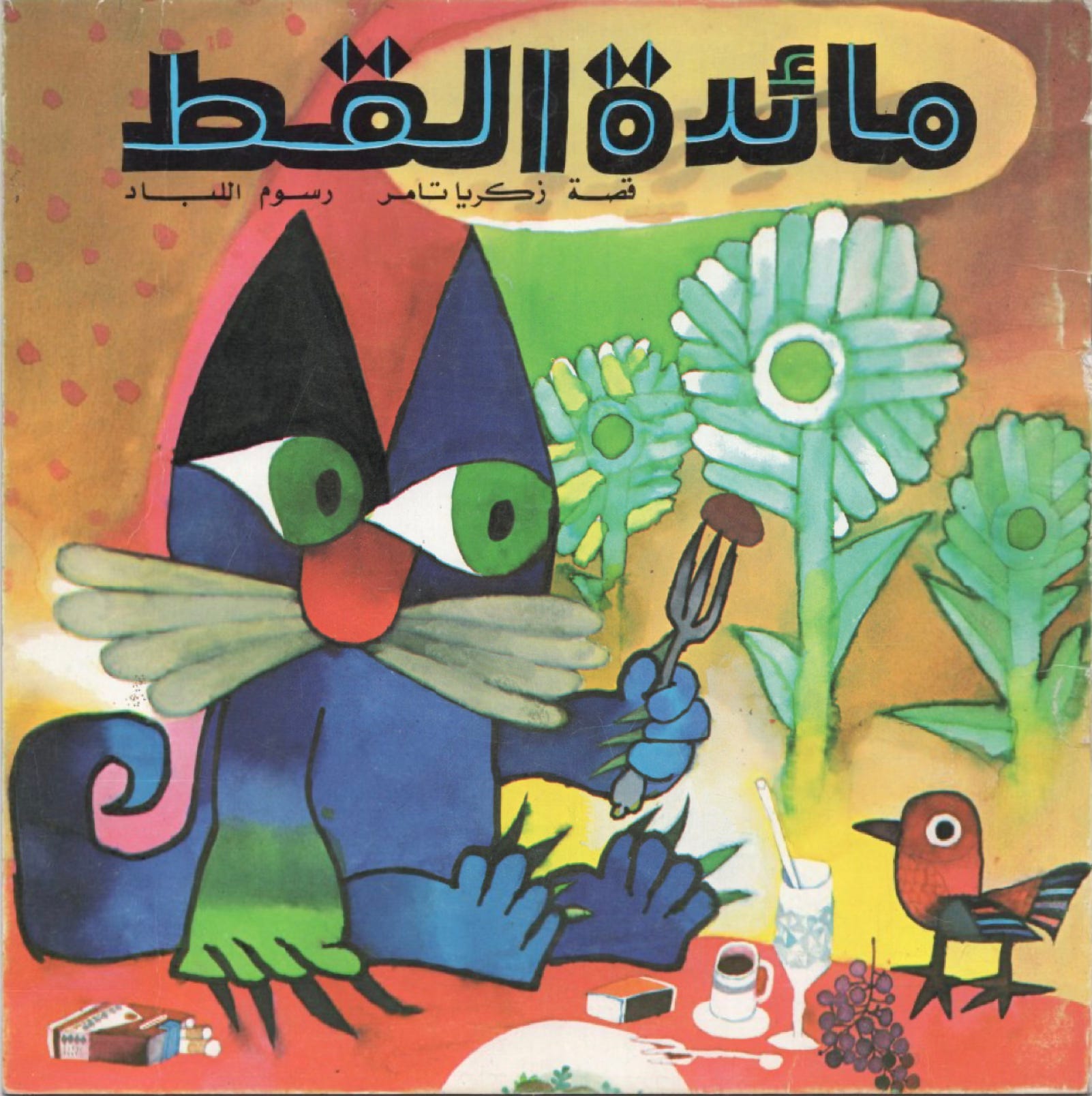
Forgotten Illustrators Issue 7
Mohieddin Ellabbad and the Lost Cosmopolitan Childhood

Some children’s illustrators become effectively invisible to the English-speaking world, not because the work is artistically minor, but because it is too deeply embedded within a specific cultural and historical formation to be rendered legible to the international marketplace without the loss of its essential character. Such figures survive primarily through recommendation among librarians, graphic designers, translators, and committed collectors rather than through canonical channels of literary recognition. Their books circulate in degraded reproductions with missing covers, in the catalogues of long-concluded international illustration festivals, in defunct educational periodicals, and in documentary photographs of children’s libraries in cities that most English-speaking readers will never visit.
The Magic
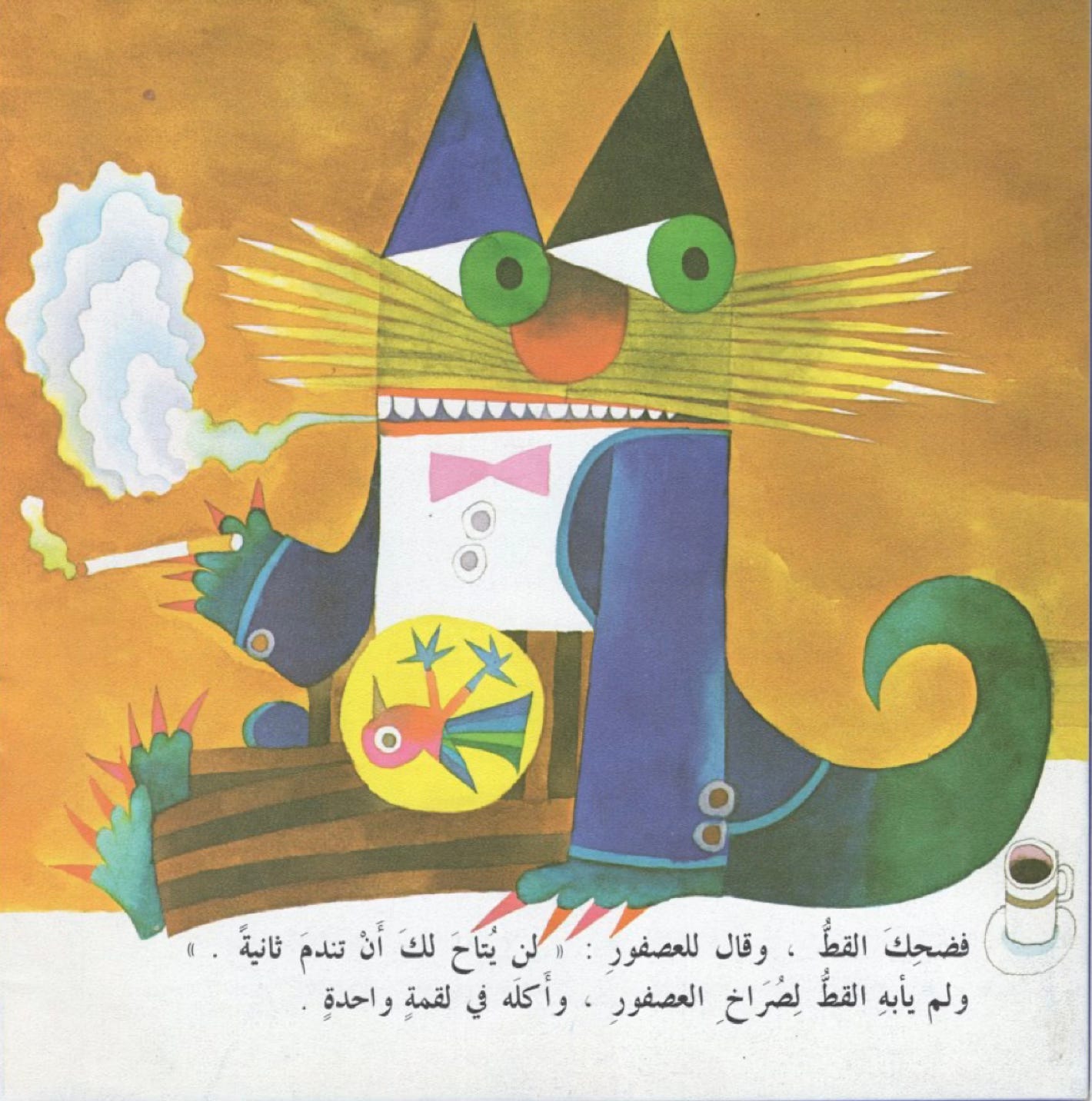
Mohieddin Ellabbad belongs, with great precision, to this category and it becomes increasingly difficult to account for his absence from the critical discourse that routinely invokes better known figures. Ellabbad’s illustrations embody the same rare synthesis of graphic intelligence and emotional warmth (artwork sophisticated enough to sustain adult attention without condescending to its child audience) that elevates these canonical figures above the broader field of illustrated children’s publishing.
What renders his work especially urgent at this historical moment is that it emerged from an understanding of childhood that now feels increasingly endangered: one that assumed children were capable of inheriting an entire civilisation rather than merely consuming branded entertainment.
His pages are dense with archival reference, folk memory, handwritten typography, elements of oral storytelling tradition, street culture, political texture, and layered visual history. They proceed from the assumption that children are capable of becoming culturally literate. Not in the sterile and administrative sense that phrase has acquired within curriculum theory, but in the deeper sense: that children can become active custodians of collective memory. Contemporary children’s culture, algorithmically mediated, market-tested, and oriented toward a globally homogenised audience, appears in many respects to have been systematically designed to foreclose that possibility.
Ellabbad was born in Cairo in 1940 and studied fine arts from 1957 to 1962 at the Academy of Art in Cairo. Before completing his degree, he had already begun working as a caricaturist for the periodicals Roz al-Youssef and Sabah al-Khayr, and wrote and illustrated his first children’s book, published in 1961. Much of his subsequent body of work carries the densely layered visual atmosphere of the city in which he grew up: its crowded commercial signage, its Arabic calligraphic traditions, vernacular architecture, worn paper textures, political posters, and the distinctive manner in which fragments of classical Arab visual culture coexist alongside modernist graphic design. That he trained not only as an illustrator but as a painter, designer, caricaturist, and visual thinker is a distinction that matters. Ellabbad’s professional reputation for an almost obsessive commitment to printing precision earned him the nickname “Monsieur Millimeter” among colleagues and printers alike.
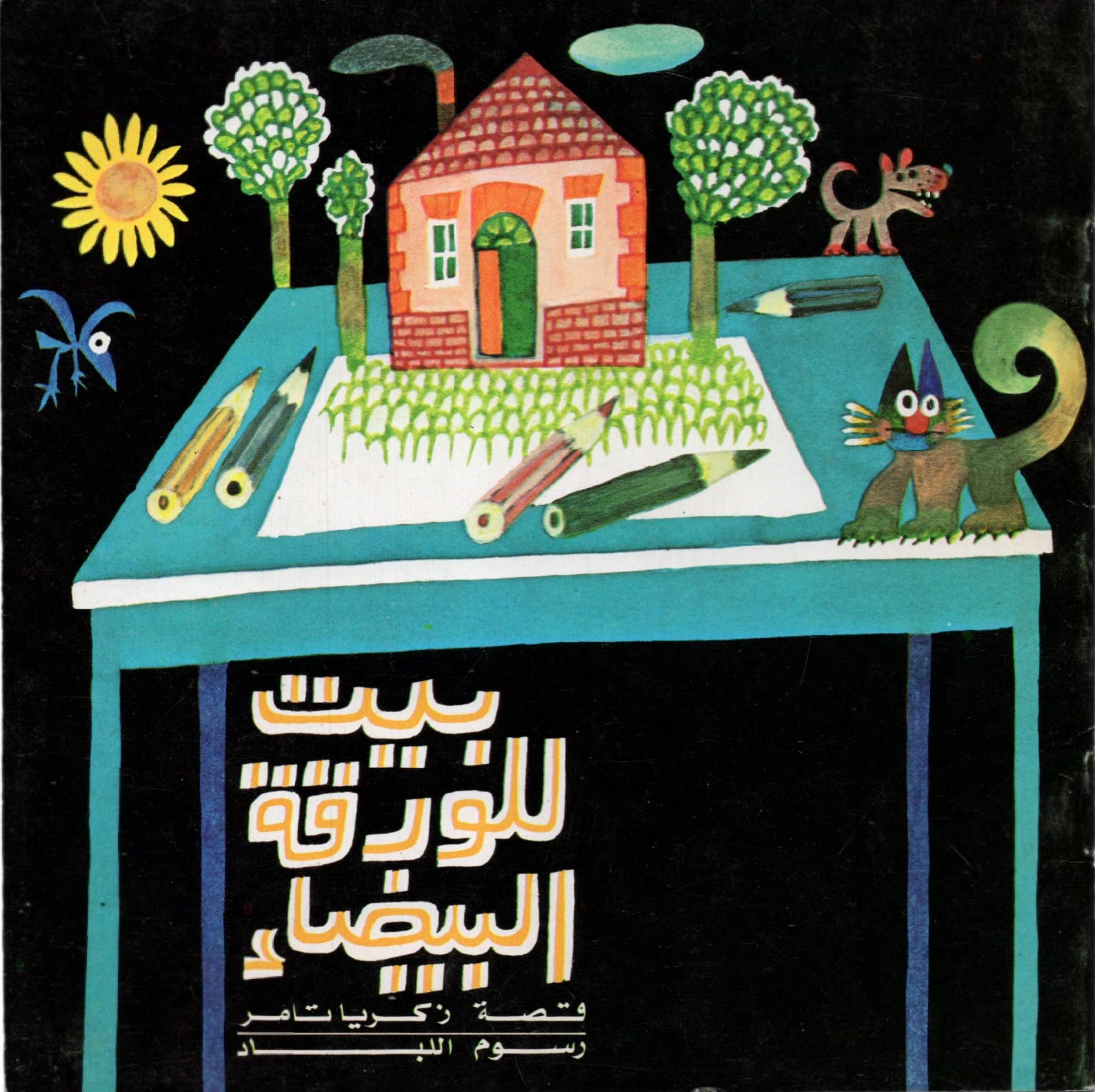
Many contemporary picture books are technically accomplished yet fundamentally passive in their visual thinking; the illustrations serve the text as accompaniment. Ellabbad’s pages think independently, organise visual information with considered deliberateness and exploit scale as a rhetorical device. They generate productive rhythmic relationships between image and typography. They require that the reader attend to the relationships between symbols, shapes, fragments of text, and layered historical reference. The influence of printmaking and poster design is legible throughout: there is an economy of line bold and decisive forms held in tension with intricate decorative complexity that ensures the pages never feel visually depleted, however playful they become.
And unlike much of what the international children’s publishing market currently exports, his work does not erase locality in the service of putatively universal “relatability.” The street environments appear specifically Egyptian. The faces are visibly Egyptian, the decorative traditions are preserved intact, the typography retains its cultural and linguistic identity. The humour is generated by social texture and lived experience rather than by the flattened emotional shorthand of global entertainment. This seems, in description, like an unremarkable artistic decision; in practice, within the economics of contemporary children’s media, it represents a profound structural divergence from the dominant model.
Modern publishing characteristically treats cultural specificity as commercial liability. Ellabbad treated it as the entire point. Among the most significant elements of his practice is the manner in which he engaged with Arab visual heritage not as museum material requiring reverent preservation, but as living raw material available for active formal experimentation. Islamic ornamentation, manuscript illumination traditions, folk motifs, and the expressive possibilities of Arabic calligraphy function within his pages not as didactic illustration of cultural continuity, but as dynamic graphic elements integrated within modern visual storytelling. Children are not merely shown their heritage from an educative distance; they are invited to inhabit it.
This is where Ellabbad distinguishes himself from the overly reverential mode that can infect culturally oriented children’s publishing and render it airless and didactic. His books are not acts of preservation, they are alive. Humour pervades the work. Animals are distorted into exaggerated caricature, faces accumulate expressive excess, letters appear to migrate across the page with autonomous energy. Certain spreads feel assembled from a process of deliberate visual scavenging combining elements of poster design, the sketchbook, oral folk narrative, and the urban documentary notebook. The emotional core of this work matters as much as its formal sophistication.
Ellabbad’s practice emerged during a period of intense cultural interrogation among postcolonial artists and writers across the Arab world, who were confronting an urgent and unresolved collective question: what should modern Arab childhood look like? Not a European childhood superficially reclothed in regional costume; not propaganda; not nostalgia crystallised into static form. Something simultaneously modern and centred, oriented toward the future without requiring amnesia about the past.
This cultural ambition acquired institutional form in 1974, when Ellabbad participated in the founding of Dar al-Fata al-Arabi in Beirut, a publishing house established by a group of intellectuals with the explicit aspiration of creating books “for Arab children, by Arab authors who contribute to writing the history of tomorrow.” The house broke decisively with the conventions of existing Arabic children’s publishing, which had largely offered instructive narratives accompanied by undistinguished illustration, by engaging prominent literary figures to produce original Arabic texts and leading visual artists to develop a new graphic aesthetic. Ellabbad served as the house’s first and most influential art director, and his collaborations with the Syrian author Zakariya Tamer produced some of its most celebrated titles.
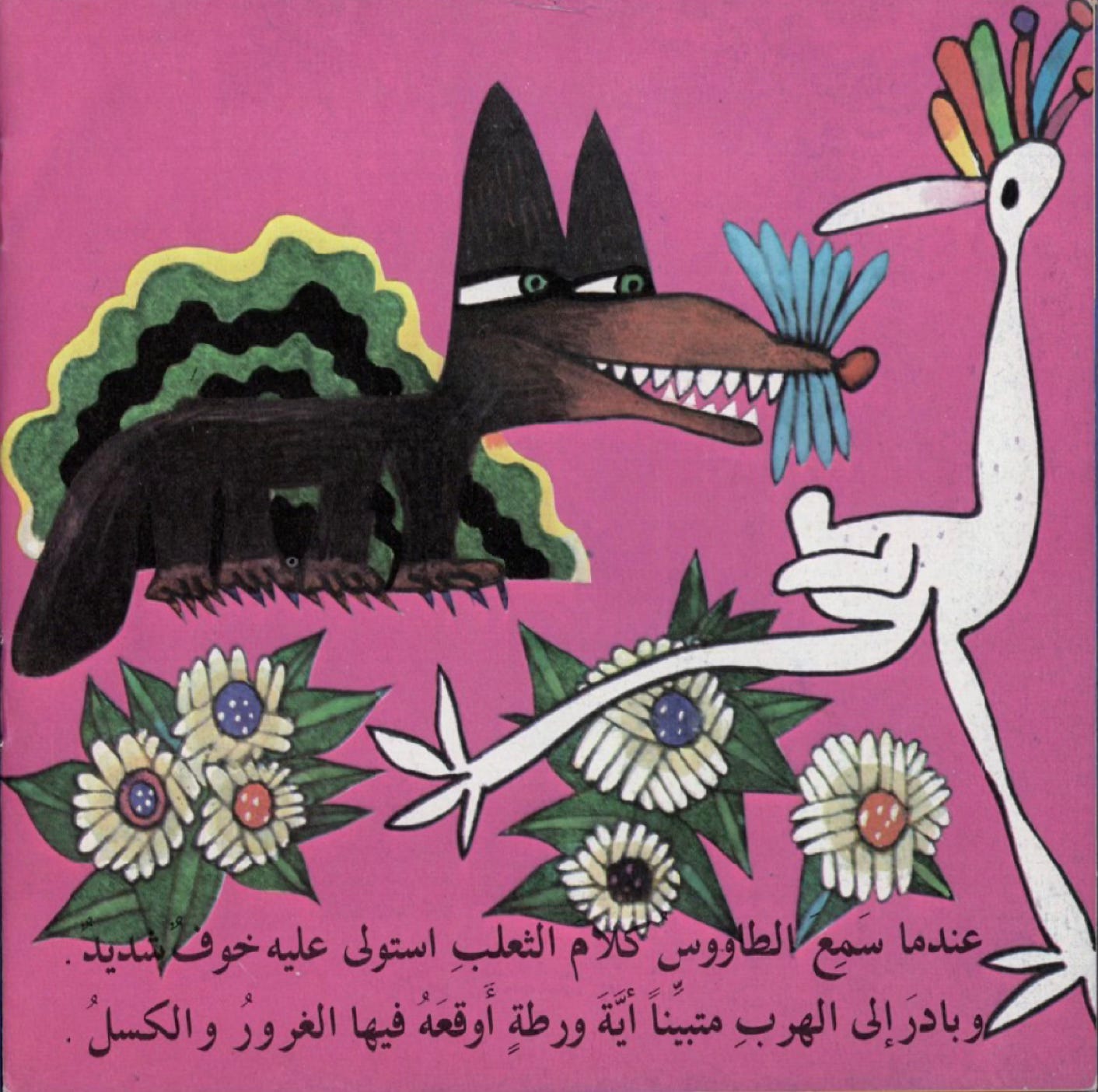
This tension between modernity and cultural centredness gives the work its extraordinary formal depth. The illustrations operate both as ancient and contemporary objects; they feel handmade and experimental, scholarly and playful, in equal measure. And the child reader is consistently treated as an intellectually active participant, capable of sustained attention, formal curiosity, and interpretive sophistication, rather than as a passive consumer requiring perpetual simplification.
This constitutes one of the fundamental dividing lines in children’s visual culture. Some books exist to pacify children; others to enlarge them. Ellabbad’s work belongs unambiguously to the second tradition. His pages reward slowness and they contain visual information that children can continue to grow into across time rather than immediately exhausting. A child might initially respond to the colour and humour; subsequently they begin noticing patterns, calligraphic rhythms, typographic decisions, historical echoes, and intertextual references. The books possess the capacity to mature alongside the reader which is a quality that has become increasingly rare as the dominant modes of contemporary visual culture are engineered for immediate frictionless legibility.
WHY THIS STILL MATTERS
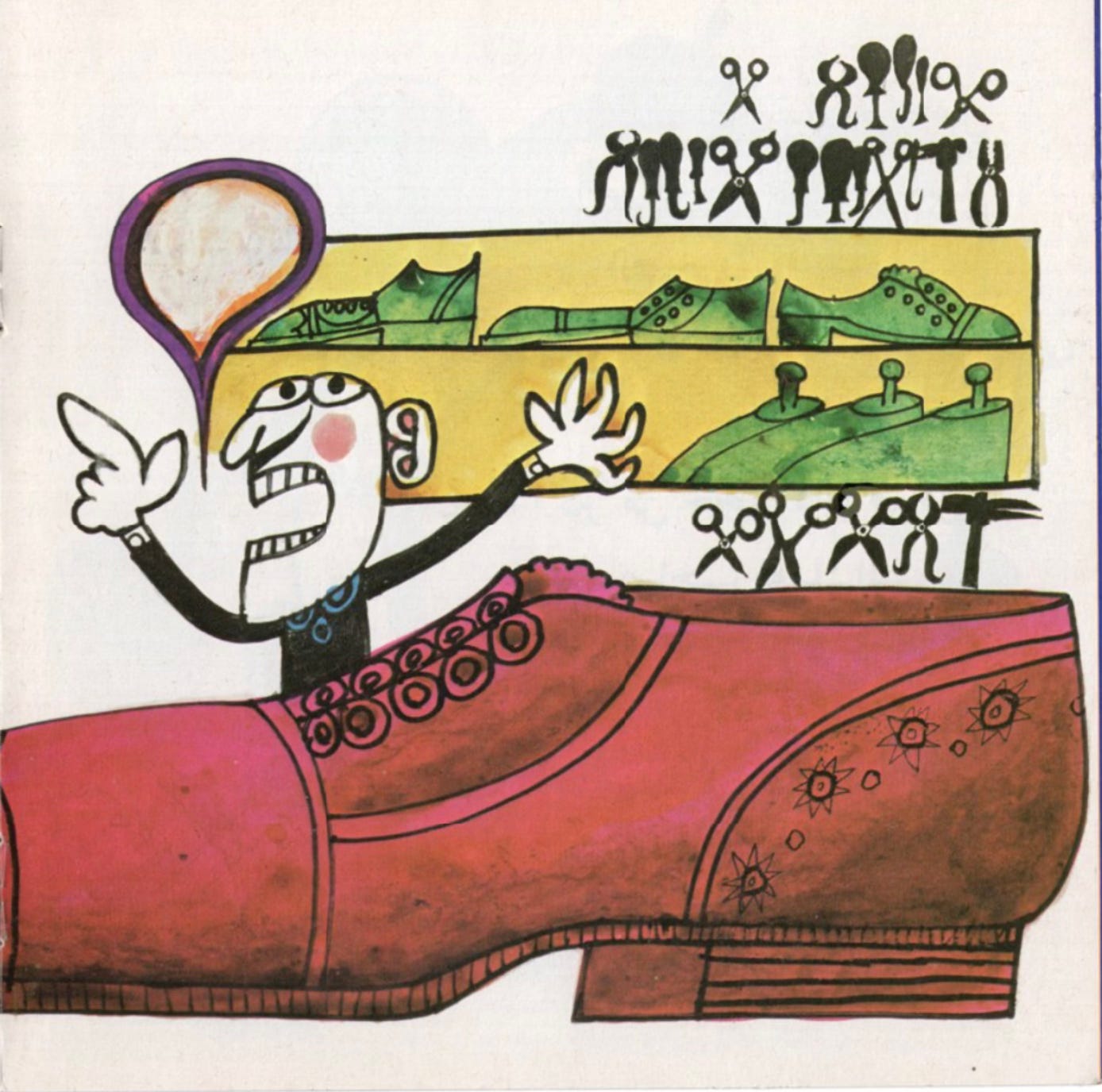
Ellabbad’s body of work feels particularly significant at this historical moment because so much contemporary children’s culture has become, in a sense, culturally weightless. Globalisation has undeniably expanded access to books across previously underserved populations and geographies. Simultaneously, however, it has generated a tendency toward peculiar aesthetic convergence: illustration styles increasingly resemble one another across national and cultural contexts, as local visual languages are dissolved beneath the soft-edged, digitally polished surface of the international children’s market. It is now possible to enter bookshops on opposite sides of the world and encounter not merely similar titles, but remarkably similar palettes, character design vocabularies, and emotional registers.
What is lost in this process is not only”representation” in the thin contemporaneous sense in which that term is frequently deployed, the presence of visually diverse characters within otherwise culturally homogeneous aesthetic frameworks. What is lost is visual civilisation itself.
Ellabbad understood, with unusual precision, that design carries memory. Typography carries memory, decorative pattern carries memory and the aesthetics of urban street culture carry memory. The texture and grain of paper carry memory, the conventions of a regional illustration tradition carry memory. Children absorb cultural assumptions through visual experience long before they possess the linguistic or conceptual apparatus to articulate them intellectually. Childhood is partly the site at which aesthetic expectations are formed (at which certain visual forms come to feel normal, beautiful, trustworthy, or alive). If the dominant visual culture offered to children across diverse societies consists exclusively of globally legible homogeneity, then childhood itself undergoes a form of aesthetic standardisation with long-term consequences for cultural identity.
Ellabbad’s Illustrator’s Notebook (part children’s book, part autobiography, part design treatise) represents his most decided statement of this philosophy, inviting readers of all ages into a rare examination of the history and traditions of Arabic visual culture through the prism of one artist’s imaginative formation. The book has received numerous international distinctions, including the Golden Apple at the Biennial of Illustration in Bratislava, the Octogone de Chêne from the Centre International d’Études en Littérature de Jeunesse in France, and prizes for the best children’s book in Arabic from the Beirut Book Fair.
His work reminds us, with considerable force, that children are capable of engaging with substantially more complexity than the contemporary market assumes. In fact, many children demonstrate a visible hunger for richer visual worlds. This is legible in the enduring appetite for older illustrated books: children return compulsively to pages that contain hidden detail, decorative complexity, atmospheric strangeness, or evidence of genuine artistic personality. They are drawn to worlds that feel inhabited by an authorial intelligence not optimised by market research, not filtered through branding logic, not flattened in the service of demographic accessibility.
Ellabbad’s work also challenges the false opposition between tradition and innovation that structures so much contemporary cultural discourse. Mainstream publishing tends to treat heritage as either sacred museum material (inert, displayed, untouchable) or as commercially embarrassing irrelevance. Ellabbad treated tradition as raw material: something available for formal experimentation, for recombination, for irreverent play. That is, ultimately, a far more generative model to offer children.
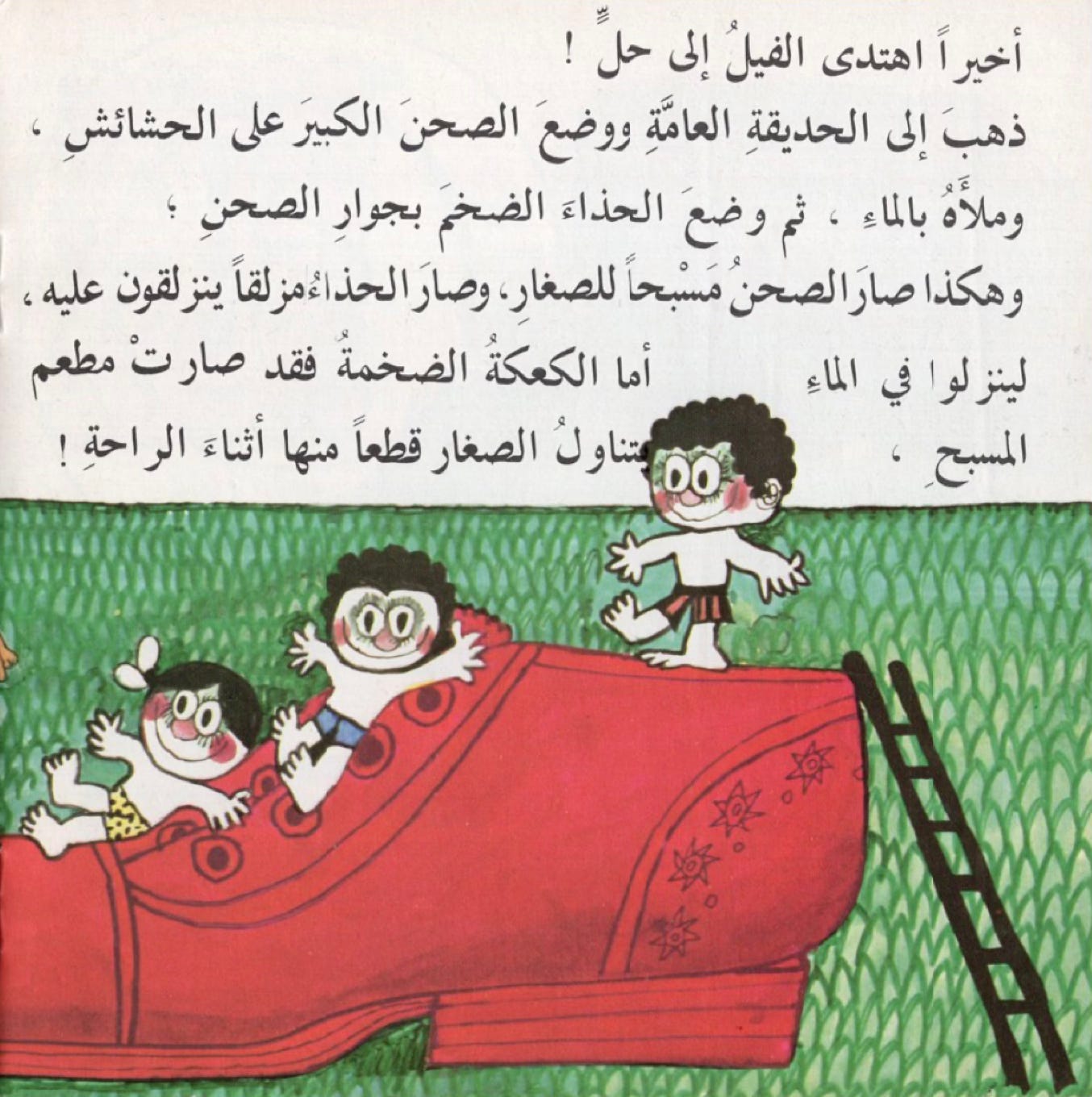
Children do not require a rootless modernity that severs all connection to the visual and cultural forms that preceded them. Nor do they benefit from a paralysing nostalgia that fossilises those forms. What they require is continuity imaginative and flexible enough to remain alive. This is perhaps the belief that connects so many of the great children’s illustrators across widely divergent cultures and political circumstances (figures such as Pulak Biswas, He Youzhi, Tove Jansson, and Victor Ambrus) despite the enormous differences in their stylistic approaches and historical situations. They share the conviction that illustration is not merely decorative accompaniment to text, but one of the primary means by which a civilisation imagines and transmits its understanding of childhood itself. When those visual languages disappear, something of considerably larger consequence disappears with them; not simply books, but entire ways of seeing, structuring experience, and situating the self within a cultural inheritance.
The tragedy is that many extraordinary non-Western children’s illustrators remain effectively inaccessible to English-speaking audiences except through the sustained effort of those rare readers willing to search beyond the boundaries of mainstream literary discourse. Entire visual traditions of equivalent innovation and sophistication to their European or American counterparts continue to exist outside the critical conversation entirely.
That absence impoverishes the field of children’s literature as a whole. Because among the most consequential functions a children’s book can perform is the enlargement of a child’s sense of what is possible aesthetically, culturally, intellectually. Ellabbad’s work accomplishes all of that. It demonstrates to children that modern life and inherited cultural tradition are not in necessary opposition.
And perhaps most importantly, his work has no smell of the diminishing tendency (now increasingly dominant in children’s media) to treat children as fragile consumers who require perpetual simplification and affective management.
Ellabbad treated children as apprentices to culture, and that older conception of childhood (serious but joyful, deeply rooted but genuinely imaginative) may be among the things most urgently worth recovering.
Jenny’s Substack is free for everyone because I believe all should have access to art and knowledge regardless of means, but if you are able to become a paid subscriber for just the price of a cup of tea or a cake per month, it would help me out a lot on my quest to not be a manual labourer any more and I would be most grateful .